posted 21st June 2026
This is an extract from my forthcoming book, Debates That Changed the World (and what we can learn from them), which will be published in June 2027 by The History Press. The book analyses eight debates.
Two debates about war: Churchill's War Cabinet in May 1940, debating whether or not to do a deal with Hitler, and President Kennedy and his advisers during the Cuban Missile Crisis in October 1962, debating whether or not to start a war with Russia.
Two debates about justice: how the Civil Rights Act (1964), which ended racial segregation in the US, and the Sexual Offences Act (1967), which legalised gay relationships in England and Wales, were passed.
Two debates about truth: the trial of a teacher prosecuted in 1925 by the state of Tennessee for teaching the theory of evolution, and the trial of Deborah Lipstadt, sued for libel in 2000 by the holocaust-denying historian David Irving after she accused him of falsifying evidence.
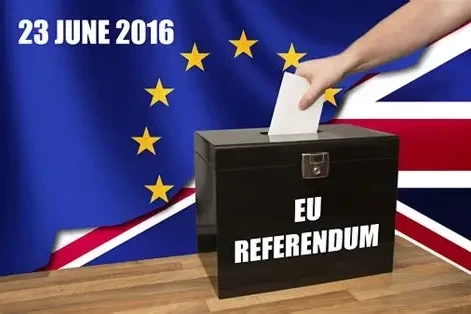
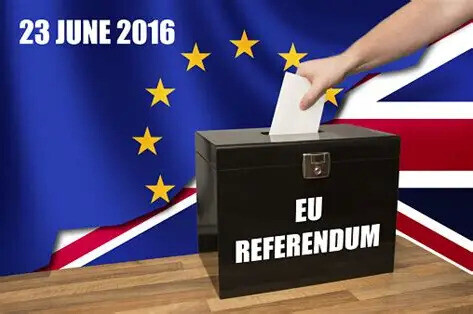
Two debates about identity: the 2016 Brexit referendum, and the 2018 referendum on legalising abortion in Ireland.
At twenty to five on the morning of June 24th, 2016, the veteran BBC presenter David Dimbleby made a solemn announcement to Britain and the world.
"We can now say the decision taken in 1975 by this country to join the Common Market has been reversed by this referendum to leave the EU … the British people have spoken, and the answer is: ‘We’re out!'"
It was a moment some had dreaded, others had dreamed of, but few had foreseen.
Brexit changed Britain, almost entirely for the worse. The narrow victory for Leave triggered three and a half years of political, social and economic chaos, bringing down two prime ministers and very nearly destroying both the Conservative and Labour parties. Parliament was trapped in gridlock; decision making was paralysed. The country split into two mutually uncomprehending tribes of Leavers and Remainers, dividing families, friends and workplaces. Leavers thought Remainers were entitled, arrogant snobs; Remainers thought Leavers were ignorant bigots. It felt like living through a messy divorce in which we, the British people, were the overlooked children.
The long term consequences of Brexit have arguably been even worse. A report published in July 2025 by the Office for Budget Responsibility concluded that Brexit had led to a 4% reduction in productivity and a 15% reduction in imports and exports. Net migration to the UK - which the Leave campaign promised to drastically reduce - had actually increased. There had been no savings of any significance on government expenditure by leaving the EU, and the benefits of new trade deals with non-EU countries were so negligible as barely to register. Another report found that, as a result of Brexit, investment in Britain had reduced by up to 18%, while GDP (gross domestic product) had shrunk by as much as 8%. Nigel Farage, who had devoted years of his life to campaigning for Britain to leave the EU, announced in 2023 that ‘Brexit has failed.’ Most people now seem to agree with him. In a poll published shortly before the tenth anniversary of the referendum, 58% said they would vote to rejoin the EU.
Why on earth did we do it?
To answer that question we need to go back over two thousand years; to the philosopher Aristotle’s The Art of Rhetoric, written in the fourth century BC. It was the first ever guide to getting people to see things your way, and arguably remains the best. Aristotle identifies four key components of successful persuasion: logos, ethos, pathos and maxims. Knowing how these four techniques work can help us understand why, despite having all the evidence and all the experts on their side, Remain lost that world-changing debate.
Logos is the exercise of reason; it is the use of logically constructed arguments, based on evidence, to convince the listener of the rightness of what you propose. In an ideal world, all decisions would be based on logos. However, in case you hadn’t noticed, we don’t live in an ideal world, so logos by itself is not enough.
Ethos is about the power of personality. It is an acknowledgement that people are more likely to believe someone they trust. That trust may derive from the speaker’s position of authority, or it may derive from their personality.
Pathos is an appeal to emotion. It would be nice if this only involved positive feelings such as joy, pride, and compassion, but the truth is that fear and anger often work better.
Maxims are short, snappy slogans which summarise a case in a few memorable words. A successful maxim can be immensely powerful.
In 2016, logos, rational calculation, was overwhelmingly on the side of staying in the EU. Logos depends above all on facts. Look at the facts, analyse and appraise them, come to a conclusion. Numbers are the purest form of fact; they are cold, clear, objective. And Remain had a lot of numbers.
On April 15th, 2016 a government-backed leaflet landed on doormats up and down the country, containing the following numbers, all of them designed to persuade people to vote Remain. Exports to the EU supported 110,000 jobs in aerospace, 136,000 jobs in chemicals and pharmaceuticals, 373,000 jobs in food manufacturing, 1,065,000 jobs in transport, 1,069,000 jobs in financial services, and a whopping 1,364,000 jobs in IT and telecoms, adding up to over 3 million in total. EU reforms on air travel had reduced fares by over 40%. The imminent abolition of mobile roaming charges would save UK customers up to 38p a minute on calls. Access to the European single market was regarded as important by 72% of foreign investors, who were responsible for putting £540 billion into the British economy every year.
Elsewhere, the government informed Welsh farmers that they received £240 million from the EU’s Common Agricultural Policy, and that it would rise to £300 million by 2020 - unless they voted to leave the EU, in which case they would lose it all. The AA warned motorists that, in the event of Brexit, they would have to find another £500 a year for petrol. Smokers were advised that a packet of cigarettes would cost £3 more. What was more, ice cream would be more expensive, and the Scots would sell less Scotch.
In May 2016, the treasury released an 83 page report on the likely impact on the economy of Britain leaving the EU, full of even more numbers. It warned that GDP would fall by 6% (an underestimate, as it turned out); unemployment would rise by 800,000; the pound would depreciate by 15%; wages would fall by 4%; inflation would rise by 2.7%. Brexit would cost every household in Britain £4,300 a year.
A lot of numbers. Surely such an overwhelming weight of evidence would make an unanswerable logical case for voting Remain. What sort of numbers did Leave have on the economy? What logical case could they make?
Leave had one number: £350 million. It could be seen, not deep in a densely argued treasury report, but emblazoned on the side of a bus which travelled up and down the country. The bus said, ‘We send the EU £350 million a week; let’s fund our NHS instead.’
This number was a lie. Although Britain did at one point send the EU £19 billion a year, which averaged out at about £350 million a week, it had negotiated a rebate which reduced that figure to £15 billion a year. What was more, the EU put £4 billion a year back into the UK. So the true figure was £11 billion a year, which averaged out at just under £212 million a week. Moreover, if all the estimates of the cost of Brexit to the economy were correct, even that saving would quickly vanish.
Leave’s solitary (and false) number was duly challenged by several experts. This did not make it go away. Instead, it ensured that it was continually being talked about, which was exactly what the Leave campaign wanted. It put one number in everyone’s head.
Most people did not remember the complex array of economic data presented by the Remain campaign, and if they did remember it, they did not believe it. But they remembered £350 million, and many of them believed it, because the story the number told felt true: someone (foreign) is taking money from us, stopping us from looking after ourselves and the people we love. It gave them someone to blame for what was wrong with their lives, and it gave them something to do about it.
Logic did not persuade enough people to vote Remain, because logic does not tell a story. Remain had a lot of facts about the economy; Leave had one lie. But Leave had a better story. Remain’s story was about how people’s lives would get worse if they did not do what they were told; Leave’s was about how they would get better if they did what they wanted. Remain offered fear, and Leave offered hope.
As well as numbers, the Remain campaign had the overwhelming majority of experts on their side. These included: the bosses of Asda, British Telecom, Marks and Spencer, Vodafone, and over a thousand other successful businesses; the former Marshal of the Royal Air Force; the former Admiral of the Fleet; the former director of UK special forces; the heads of Oxfam, Action Aid, Save the Children and Christian Aid; the head of the National Health Service; several former secretaries general of the United Nations and US secretaries of state; the heads of the World Trade Organisation, the US Federal Reserve and NATO; US president Barack Obama; the actors Benedict Cumberbatch, Keira Knightley and Kristin Scott Thomas; the writers John Le Carre and Hilary Mantel; the musicians Paloma Faith, Hot Chip and Alt-J; the Archbishop of Canterbury; thirteen Nobel Prize winning scientists; the Royal Society for the Protection of Birds - and the footballer David Beckham.
A lot of experts. And yet experts turned out to be no more helpful to the Remain cause than numbers.
Interviewed on Sky News on June 3rd, Michael Gove, one of the leaders of the Leave campaign, spent seven minutes failing to find a single business, serious economic body or significant international ally that supported Brexit. Finally he announced, ‘the people of this country have had enough of experts … saying that they know what is best.’ Many observers were shocked to see this famously erudite and brilliant man abandoning reason on live TV. But it was one of the cleverest things he had ever done. Gove spoke for many people who compared their lives with the lives of the experts who backed Remain, and felt a complete lack of connection.
Ethos - how people felt about the experts - trumped logos. Week after week, the great and the good issued press releases, gave interviews and signed letters to the Times backing staying in the EU. But their expert status was a disadvantage. What, thought many people, did these experts know about what it was like to battle every day to pay your electricity bill, to get a doctor’s appointment, to support a child struggling in an overcrowded, overlooked school? How dare they tell us what to do? Why should we believe them? Gove told a story of Leave sticking up for the little man and woman against an aloof, arrogant establishment. It was a powerful story, which reflected many people’s lived experience. When you want to persuade people, stories beat spreadsheets every time.
Who tells the story matters as much as the story. Boris Johnson was the loudest and most colourful voice for Leave. Witty, charming, and irreverent, he had built his reputation as the Daily Telegraph’s Brussels correspondent in the 1980s, writing outrageous and frequently untrue stories alleging that the EU would ban curvy bananas and prawn cocktail crisps. He had a chaotic personal life, messy hair, and poor attention to detail. As his cabinet colleague Amber Rudd said of him, Boris was the life and soul of the party, but you wouldn’t want him driving you home at the end of the evening.
However, most people didn’t seem to worry about him driving them home at the end of the evening, because nobody was thinking about how to get home; no plans had been made for what would actually happen if Britain did leave the EU. What they noticed was that Boris (as he was universally known) was plain speaking, direct, funny, and told a positive, hopeful story that looked to a future of independence and rediscovered greatness, quite unlike the grim-faced warnings of the great and the good. Despite having been educated at Eton and Oxford and speaking with a decidedly plummy accent, he did not look like an expert, or a politician, and he knew it. There is a considerable body of evidence that Leave would not have won the referendum without Boris Johnson’s support.
Remain’s leaders looked lacklustre by comparison. The prime minister, David Cameron, felt compelled to be restrained and responsible by virtue of his position. Jeremy Corbyn, leader of the Labour Party, had some of Johnson’s charisma and popular following, particularly with younger voters. But he was a very reluctant supporter of EU membership, and it showed. He turned down multiple offers to take part in campaign events, went on holiday for a week just before the vote, and, like a grumpy schoolmaster, gave the EU seven out of ten.
The Remain campaign never quite got up to speed. While the Leave bus, with that £350 million on its side, hurtled up and down the country, bringing Boris to countless small towns to crack jokes and pull pints, representatives of the main political parties resorted to standing in front of stationary cars in their parties’ respective colours at the Oval cricket ground in London. Following three internal meetings, the Green Party insisted on swapping their car for a Brompton bicycle. Remain was going nowhere, slowly.
So Leave had ethos on their side; the charismatic charmer outbid the faceless heads of acronym-heavy quangos and the flatfooted mainstream politicians. What about pathos? Where did feeling come into it?
There are few more fundamental human emotions than the desire to protect yourself and those you love against external threats. For many people, immigration was just such a threat. On May 28th, with less than one month to go until polling day, the Office for National Statistics released immigration figures for 2015. Net migration - the number of people arriving in the country minus the number leaving it - had hit a record high of 336,000. David Cameron’s government had promised to reduce immigration to below six figures. They had failed, spectacularly. Membership of the single market of the EU entailed free movement of people, goods and capital. This meant that up to 500 million people could, in theory, enter the country at any moment. And there were more countries waiting to join, on the eastern borders of the EU.
Leave seized on these numbers. Immigration was out of control, and it was only going to get worse. Turkey had 76 million people, and was applying to join the EU; they could all be here in months. Our communities were being overwhelmed, and our public services could not cope. The only way to stop it all was to leave the EU. The anti-immigration campaign reached its zenith when, one week to go to polling day, Nigel Farage unveiled a poster showing a line of dark-skinned men snaking through green fields with the slogan ‘Breaking Point’.
The reality was a little more complex. Half of immigrants came from outside Europe. The health and social care systems on which millions of British people depended was kept afloat by 100,000 EU workers. EU citizens contributed £20 billion more in taxes than they took out in benefits.Turkey was many, many years away from being admitted to the EU, and in any case the British government could veto their membership. The dark-skinned men on the poster were not from the EU; they were Syrian refugees crossing the border between Slovenia and Croatia, hundreds of miles from Britain.
But this was not what it felt like, above all to people who were less economically advantaged. In the 2016 British Social Attitudes survey, 71% of respondents felt that immigration increased pressure on schools, and 63% said it increased pressure on the health service. Although there was a slight majority for the view that immigration was good for the economy, by 42% to 35%, there was also a significant division on grounds of class and education. Just 15% of graduates felt immigration was bad for the economy, compared to 51% of people with no formal qualifications.
Though the immigration debate used numbers, and was, for some, not without basis in economic reality (high levels of immigration are beneficial if you need a nanny, a cleaner or a builder, but are not so beneficial if you are a nanny, a cleaner or a builder) it was powered above all by emotion. People whose communities had been hollowed out by the austerity policies of the 2010-15 coalition government felt overlooked, forgotten, unloved. Talk of tax receipts and GDP meant little to those who saw their communities crumbling around them. They were afraid, and they were angry. One man interviewed as part of a report by BBC Yorkshire on the impact of Slovakian travellers in Rotherham spoke for millions. ‘I’m moving out,’ he said. ‘These people are taking over our parks and public spaces and the place is in a complete mess,’ before adding, ‘We never voted for this, it’s not fair.’
The Leave campaign listened to people like that Yorkshireman, and told their story back to them. People who are not like you are taking the little you have, you are powerless to stop them, and it’s not fair. You are a people under siege, but we can offer you liberation. Remain could only offer statistics and explanations of legal procedures. Even the most optimistic Remain campaigners had to accept that they were hopelessly outplayed on immigration. Pathos trumped logos.
In the end, though, it came down to four words against three. The slogans - what Aristotle would call the maxims - of the competing campaigns contained their respective DNAs.
Remain had Stronger, Safer, Better Off. Three comparatives. What they were comparing was how the country was now with how it might be in an indeterminate future. Leave the EU, and things will get worse. Stay with the EU, and things will be better. But better than what? Better than how they would be if we left, which would be worse. All that the Remain slogan offered was more of the same. The problem was that, in the wake of austerity, most people did not feel particularly strong, safe or well off. Why would they want more of the same?
Leave had Take Back Control. This spoke to the experiences of many people of not feeling in control of their lives in the face of eviscerated public services and rapid, large scale immigration. It told a positive story of recovering something that had been lost. It also contained a forward offer; once we have taken back control, think what we might be able to do.
Leave won because it told a better story. It spoke to people’s resentment at loss of control in their lives, and their sense of being marginalised and overlooked. But it also told a positive national story of a people regaining pride, control and independence. Remain could only tell a negative story of the danger of change, and of possible loss. It helped that Remain was supported by the establishment, while Leave offered the thrill of, in Boris Johnson’s words, sticking two fingers up at the experts. In the end, the positive story beat the negative story; hope triumphed over fear.
What can we learn from the Brexit debate?
If you want to persuade people, it is not enough to be right, still less to tell people that they are wrong. Be sparing with your numbers; personality and feelings are far more influential. Above all, you need a clear, simple, positive story which can be expressed in a few words and which speaks to how people feel about the lives they actually lead, and you need a charismatic, memorable leader to tell it.
There was not an overwhelming majority for Brexit. The result of the referendum was close, 51.9% to 48.1%. Just two per cent of voters changing their minds would have kept us in the EU. If the Remain campaign had created an optimistic, hopeful story about an open, inclusive country which was proud to welcome immigrants and was enriched by them - and had found someone of the charm and personality of Boris Johnson to tell it - Britain would be a better place today.
Stories matter. Stories change the world. If you want to change the world for the better, get your story right.