posted 26th January 2026
What is sovereignty?
Sovereignty is about who has control. Specifically, it is about who has control over a country. Who makes the laws? Who decides who can come into and go out of the country? In a sovereign country, that should be its government. Sovereignty is protected under international law. No country is allowed to interfere in another’s affairs.
You would expect most countries would want to keep their sovereignty. However, there are some times when they might want to give it away; there are also times when an external force might take it away. Whether the first is a good thing to do, and whether the second is the right thing to do, are matters for debate.
In practice, very few countries are absolutely sovereign (any more than anyone has total control over their own life). Every time a country enters into an agreement or treaty with another country it voluntarily gives up some of its sovereignty. It does this because it calculates it gains something from the agreement which more than compensates for the loss of sovereignty.
Some of these treaties might be on a very small scale, restricted to certain sectors. If you let us sell our widgets to your country, you can sell as many dongles as you want to our country. We’ve given up control over how many dongles come into our country, perhaps hitting local dongle makers, but it’s worth it overall because we will make so much more money selling our widgets overseas.
Other agreements are on a much bigger scale. When Britain was in the European Union (EU), it had to give up quite a lot of its sovereignty. Being in the single market meant free movement of capital, goods and people. This meant we could not stop anyone from any country in the EU investing in our businesses or selling their stuff in our country, and we couldn’t stop anyone from those countries coming to work here. But, in return, we could invest in businesses and sell our stuff to those countries, and we could work in those countries. We also had to accept some rules and laws that applied to all members of the EU. Supporters of the EU reckoned that it was worth sacrificing some of our sovereignty, because being in the EU gave us access to the largest market in the world, providing lots of opportunities to buy and sell things, bringing us prosperity. Opponents of the EU thought we had given up too much control, especially over immigration. The slogan of the No campaign in the 2016 referendum was ‘Take Back Control’. It obviously appealed, because No won, and Britain is no longer in the EU.
Another example of giving up sovereignty is NATO, the North Atlantic Treaty Organisation. Set up in 1949, it included the US and all the western democracies. Its original function was for mutual protection against the Soviet Union, but it has survived the collapse of Communism in 1990.
Article Five of the NATO treaty states that ‘an attack on one is an attack on all’; that is, if one NATO country is attacked, all NATO countries will come to their defence. This has been invoked only once, following the terrorist attacks on America on September 11th, 2001. All NATO countries joined in overthrowing the Taliban regime in Afghanistan which had sponsored the attacks.
Being in NATO means giving up control over when you fight a war. You can’t just say, ‘I’m sorry your city got bombed, but it’s got nothing to do with me.’ NATO members feel it is worth giving up some sovereignty in order to know they are protected. It is significant that, following Russia’s invasion of Ukraine, Finland and Sweden, both near neighbours to Russia, have recently decided to join NATO after many decades of neutrality.
Donald Trump has lately (January 2026) been upsetting notions of sovereignty. He ordered the kidnapping of Nicholas Maduro, president of Venezuela. Maduro was a brutal, corrupt dictator who imprisoned and tortured thousands of people and destroyed the Venezuelan economy. Still, kidnapping him was against international law. If he could be kidnapped, why not any other head of government? Trump claimed Maduro’s crimes justified his action.
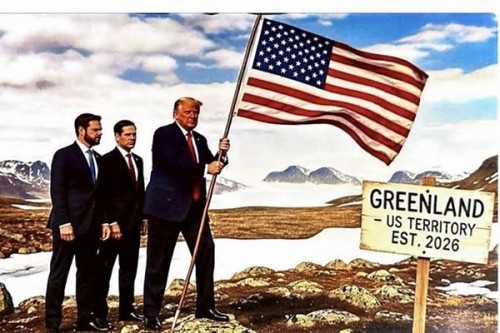
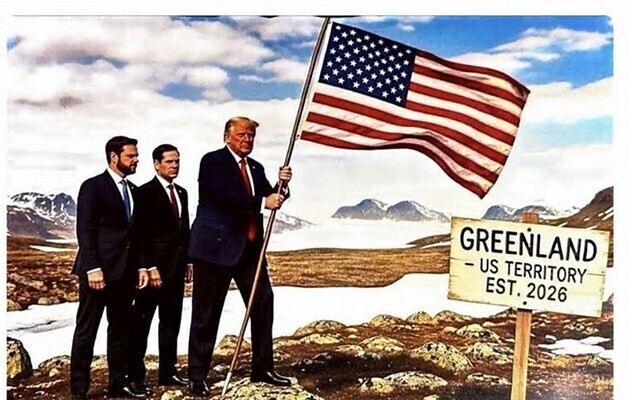
Next, Trump threatened the sovereignty of Greenland, by saying he wanted to make it part of America, either by a forced sale or by an invasion. He claimed this was necessary to protect America’s security. The people of Greenland do not want to be American. Greenland is part of Denmark, a NATO country, so if Trump invaded it he would be going to war with an ally. According to the NATO treaty, every NATO country would then have to declare war on America (and America would have to declare war on itself). Trump doesn’t seem too bothered by this. He doesn’t have much time for NATO, as he doesn’t have much time for anything or anyone that stops him doing whatever he wants. It is not impossible that the US will leave NATO some time soon.
These two wild actions by the US president make the issue of sovereignty more significant than ever.
Motions that go with this topic
1. This house would rejoin the EU.
2. This house would form a European army.
3. This house would assassinate dictators.
4. This house would send British troops to defend Greenland against a US attack.