
posted 23rd March 2026
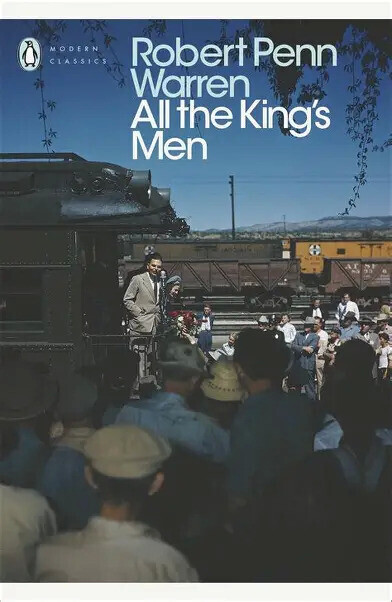
Much of politics is about debating, and much of debating is about politics. There are few better depictions of the political life - the intrigue, the factions, the struggles for control, the clashes of ego, the friendships forged and betrayed, the stabs in the back and the stabs in the front, the meteoric rises and catastrophic falls - than the American writer Robert Penn Warren’s 1946 novel All the King’s Men.
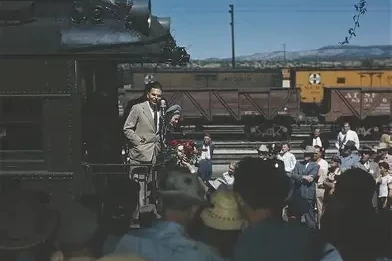
The main character is Willie Stark, based on the populist demagogue Huey Long, who served as Governor of Louisiana from 1928 to 1932, and then as Senator from 1932 until his assassination in 1935. Like Long, Willie is a foul mouthed, corrupt, womanising bully; also like Long, he is a popular hero, acclaimed everywhere by his first name, worshipped by his followers for his generous handouts from the public purse.
We see Willie up close and personal through the eyes of the narrator, Jack Burden, who invariably refers to him as ‘The Boss’. Jack has been drawn into Willie’s inner circle as one of his closest courtiers. He is transfixed by Willie’s charisma, and has an almost chemical addiction to the endless conflict and jeopardy that surrounds the great man. He is at his master’s beck and call twenty four hours a day, ready to bribe those who need bribing, threaten those who need threatening, and dig the dirt on those for whom blackmail is the only solution (as Willie tells him at one point, ‘There’s always something.’).
Willie is a restless, driven character who can never sit still. He barely sleeps and lives on adrenaline, cigarettes and liquor. It feels exhausting to follow him and Jack in their perpetual pursuit of power through crowded diners, mass meetings, and midnight confrontations in (literally) smoke filled rooms. The sub-tropical climate of Louisiana is like an extra character in the book. Heat and humidity are a constant presence, another enemy to be fought with on a daily basis, while sweat soaks through everyone’s clothes like guilt. The intense, febrile atmosphere is magnificently evoked in Penn Warren’s prose, which swerves giddily between sensuous lyricism and clear eyed realism.
A word of warning. The racial politics is very much of the novel’s time and place, and can make a modern reader feel uncomfortable; the ’n’ word is used freely and without apology by all and sundry, and the only function of non-white characters is to open doors or pour drinks.
Willie begins as a well meaning but ineffective campaigner against corruption and inefficiency before he is pushed into deviousness and brutality by an early experience of betrayal. Jack starts out wanting to discover the truth, first as a history student, then as a reporter, but ends up using his investigative skills to bring down Willie’s enemies. But despite the characters’ failings, this is anything but a cynical book. Rather, All The King’s Men dramatises the one, eternally recurring dilemma of politics down the ages; when and where and how much do you compromise? Which matters more, purity or power? Willie is not an unmitigated monster; Penn Warren is too skilful a writer for that. There still lurks behind all that he does a sense that he truly wants to make people’s lives better. As he confides to Jack, ‘You got to make good out of bad. That’s all there is to make it with.’ But how much bad? For how much good? That is the question all politicians have had to wrestle with, from Brutus onwards.
All The King’s Men is a long way from a glib anti-politics satire of the lazy ‘They’re All the Same’ variety. It is a much more interesting and much truer book than that. Its characters are intensely human, possessed by complex, contradictory desires, mixed of venality and heroism, high idealism and low pragmatism, driven by both a noble sense of duty and their own restless, inescapable demons. As, it is important to remember, is almost everyone in politics.